Why Production Builders Are Losing Buyers to "AI-Ready" Homes
New-home inventory has been sitting on the market longer than it has in years, and production builders are responding the way they usually do — with rate buydowns, closing-cost credits, and price cuts. Those tools work, but they're a race to the bottom that every competitor can match within a week. Meanwhile, a smaller but growing group of buyers is asking a question most builders aren't equipped to answer well: what happens when I want to add an EV charger, a home battery, or more smart devices after I move in?
For most production homes, the honest answer is "you'll need to open a wall." That's a problem — and an opportunity.
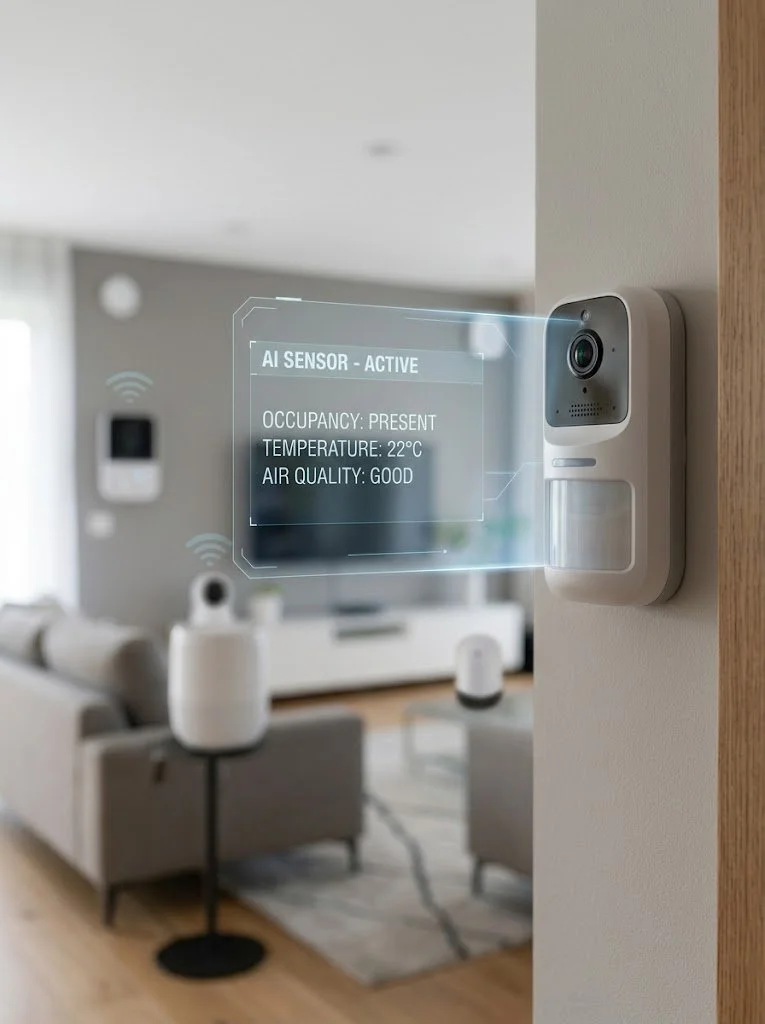
The Smart Home Bundle Isn't Infrastructure
Several major national builders have rolled out smart-home programs over the past several years — a bundled lock, thermostat, and doorbell from a named technology partner, installed standard or as a package. These programs are genuinely useful, and they move the needle in a showroom. But they share a common limitation: they're a device bundle, not an infrastructure spec.
A device bundle answers "what's already installed." It doesn't answer "what can I add later without a contractor cutting into my drywall." Those are different questions, and buyers are increasingly sophisticated enough to ask the second one — especially buyers who already own an EV, or who've lived through the hassle of retrofitting a smart thermostat into a house with no C-wire.
What Buyers Are Actually Telling Builders
Backed by data, surveys of home shoppers have repeatedly found that a majority would pay more for a home with genuine smart-home infrastructure, and some studies put the perceived value add in the tens of thousands of dollars per home. Separately, research on EV charging access has found measurable home-value premiums tied specifically to charging infrastructure; not the car, the circuit.
None of that shows up as "AI-ready home" demand in a typical buyer survey. It shows up as EV charger requests, as questions about panel capacity, and — increasingly — as buyers walking a model home and asking whether the garage has a 240V outlet before they ask about the kitchen backsplash.
The Whitespace: Infrastructure as a Tiered Product
Here's the opportunity most builders haven't claimed yet: treating infrastructure like a real option, not a flat spec every home gets or doesn't.
A tiered model — a baseline "future-proofed" standard on every home, with clearly defined upgrade tiers for buyers who want more — does three things a flat device bundle can't:
It keeps the base build cost-effective.
1
Every home gets the wiring and panel capacity that make future upgrades possible, without the builder absorbing the cost of premium equipment for buyers who don't want it.
It gives the sales team a real upsell, not just a feature list.
2
"Essentials, Plus, and Elite" is a pricing conversation the sales team can actually have at the design center — the same way builders already sell flooring and countertop tiers.
It's defensible on the plan set, not just in the showroom.
3
An engineered rough-in spec — panel sizing, conduit runs, low-voltage home runs — can be documented, licensed across plan series, and QA'd at framing, the same way any other structural or MEP spec is.
Where This Goes From Here
The builders currently winning the technology conversation are, almost without exception, still selling a device bundle. That's a gap, not a dead end; it means the infrastructure story is still unclaimed in most markets. For a production builder looking for a differentiator that can't be matched by a rate buydown next week, an engineered, tiered infrastructure spec is one of the few levers left that actually changes what the home is, rather than just what it costs.